
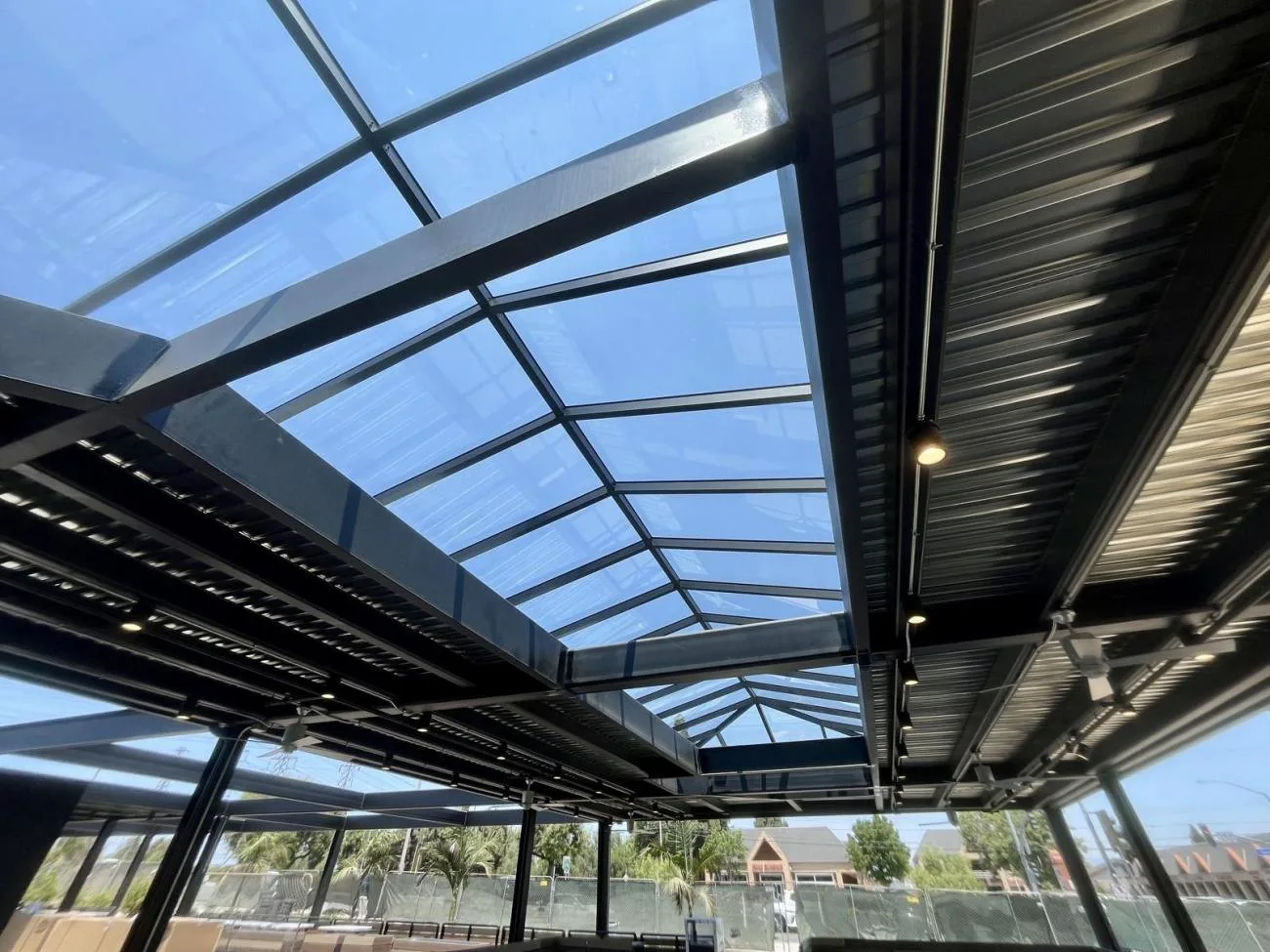
This is the part of the business we are proudest of. Standard skylights come in standard sizes. A custom glass skylight is built to the opening, the architecture, and the light you are after. If it can be drawn, we can usually build it in glass. Below are the shapes we build most, with real photos from real jobs, because the shape is the selling point.
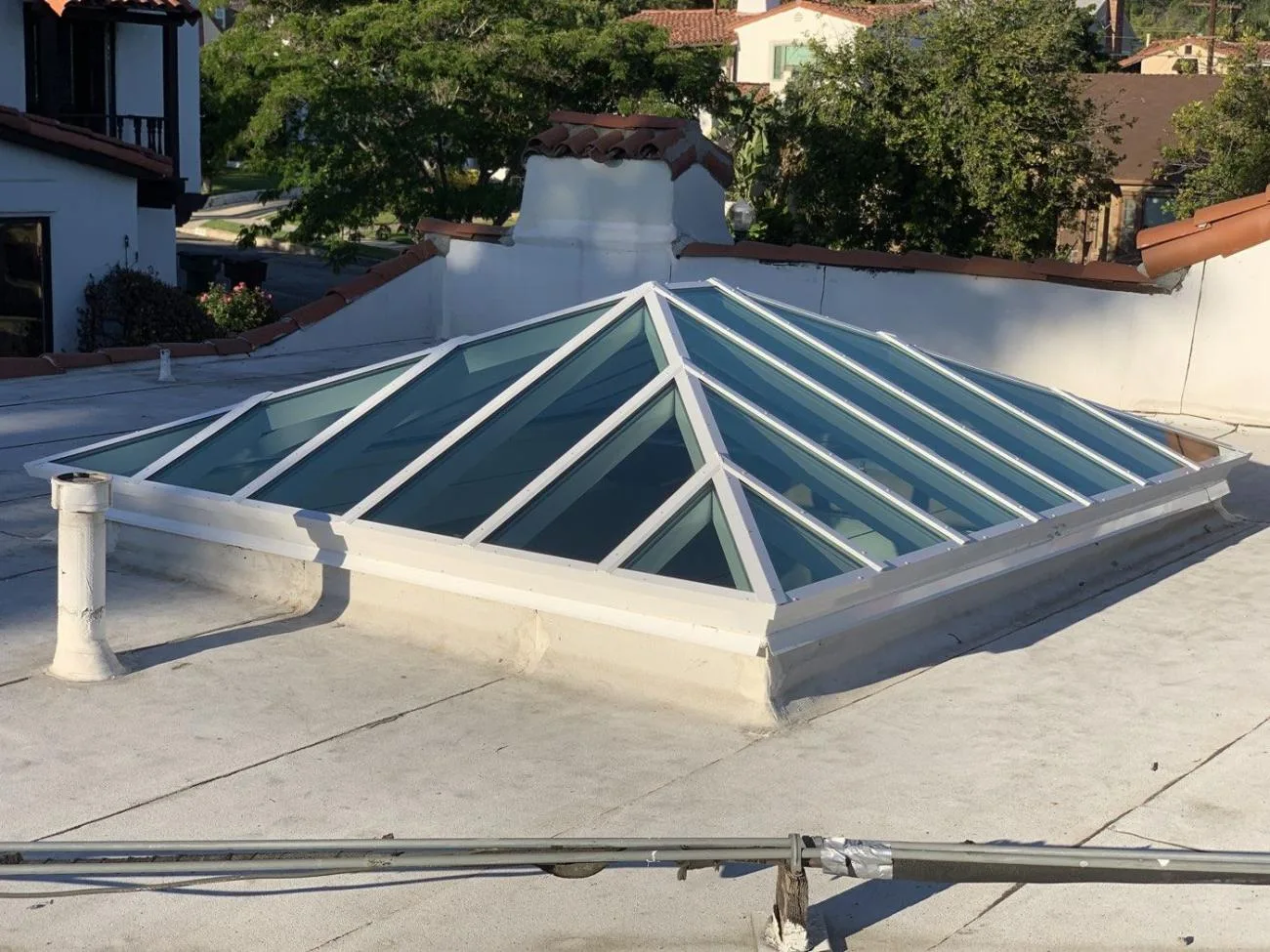
Pyramid
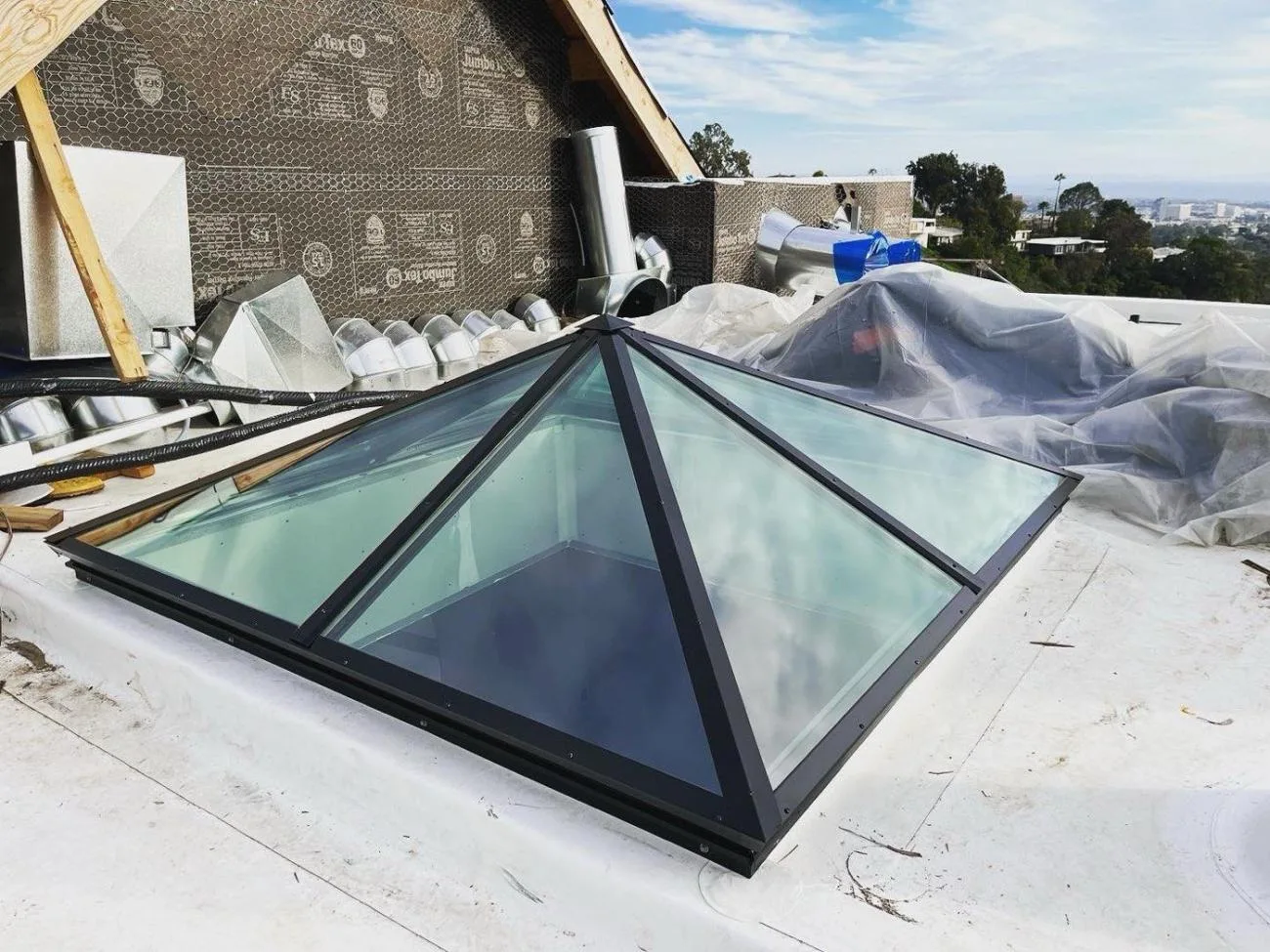
Four glass faces rising to a point. Pyramids need a flat roof to sit on, they are the classic centerpiece over an entry, a stairwell, or a great room on a flat-roofed home or building. Frames in bronze, black, white, or gray.
Ridgelite
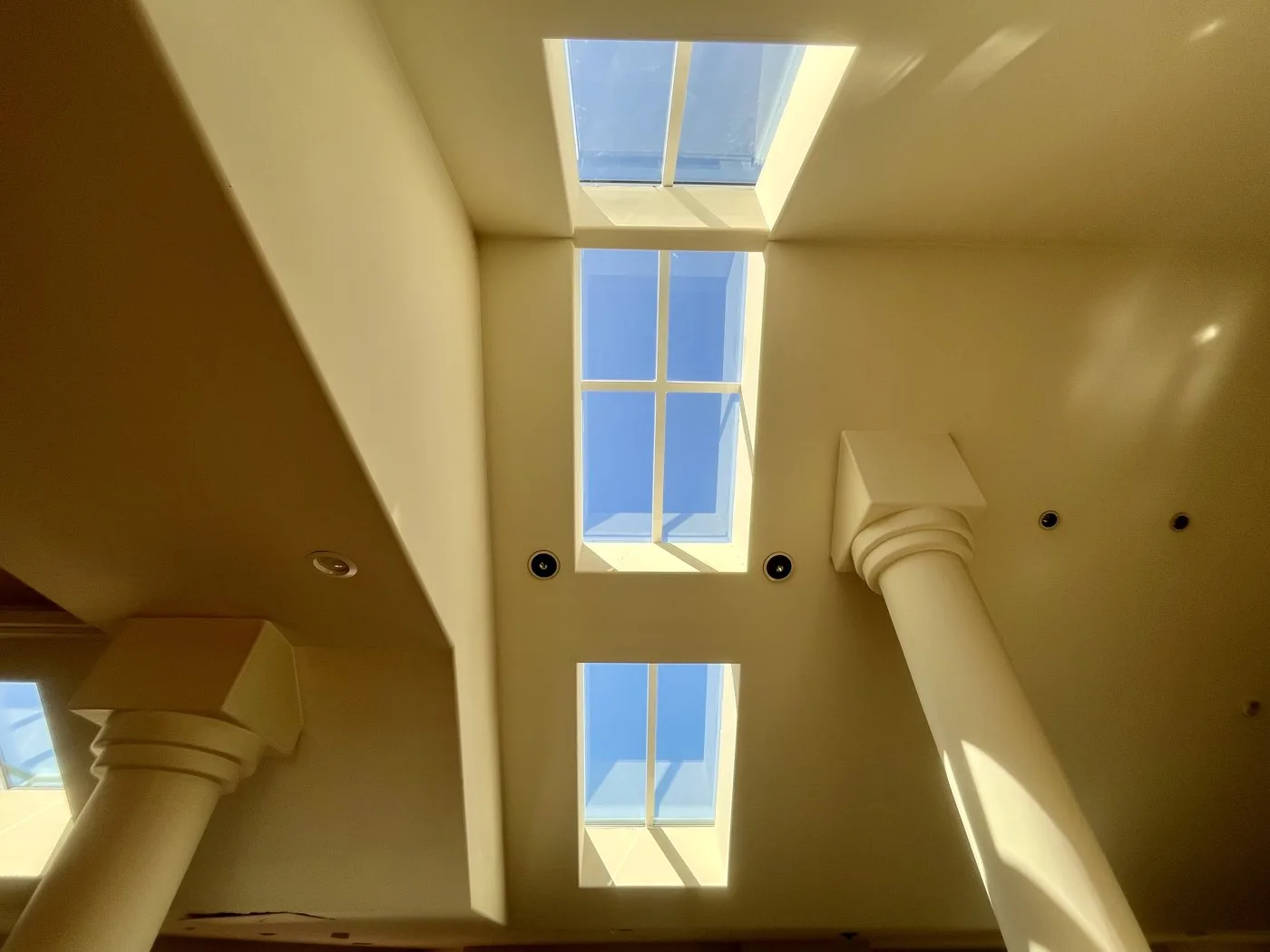
A ridgelite replaces a section of your actual roof ridge. It spans both sides of the pitch, glass on either slope meeting at the top, so light pours in from two directions at once. Beautiful over a hallway or a kitchen.
Double-Pitch with Hipped Ends
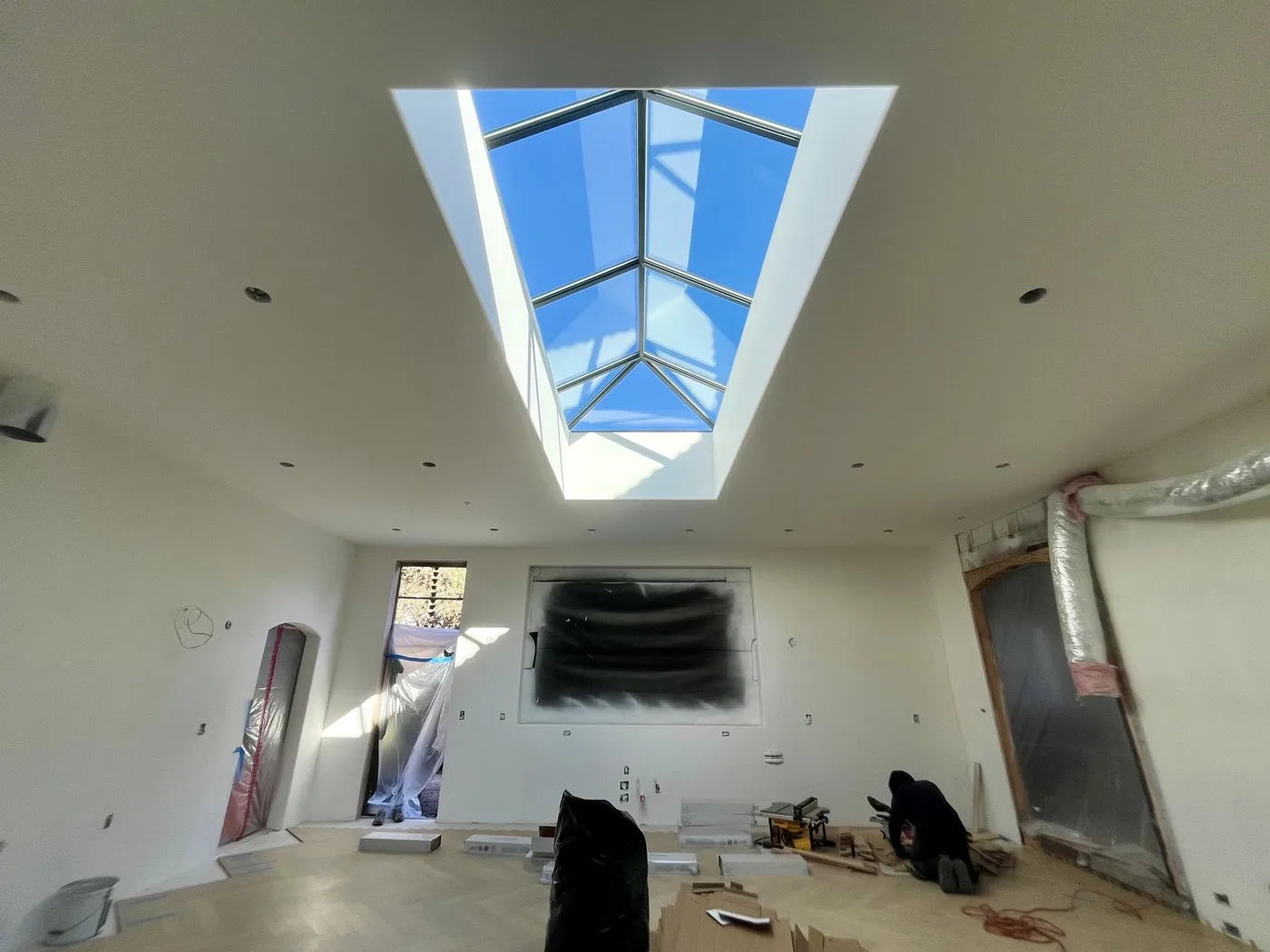
One of our most popular shapes. The ends are hipped, angled inward rather than square, so the whole unit tapers to a ridge instead of standing flat. It reads as a genuine architectural feature both from the street and from below.
Double-Pitch with Glazed Ends
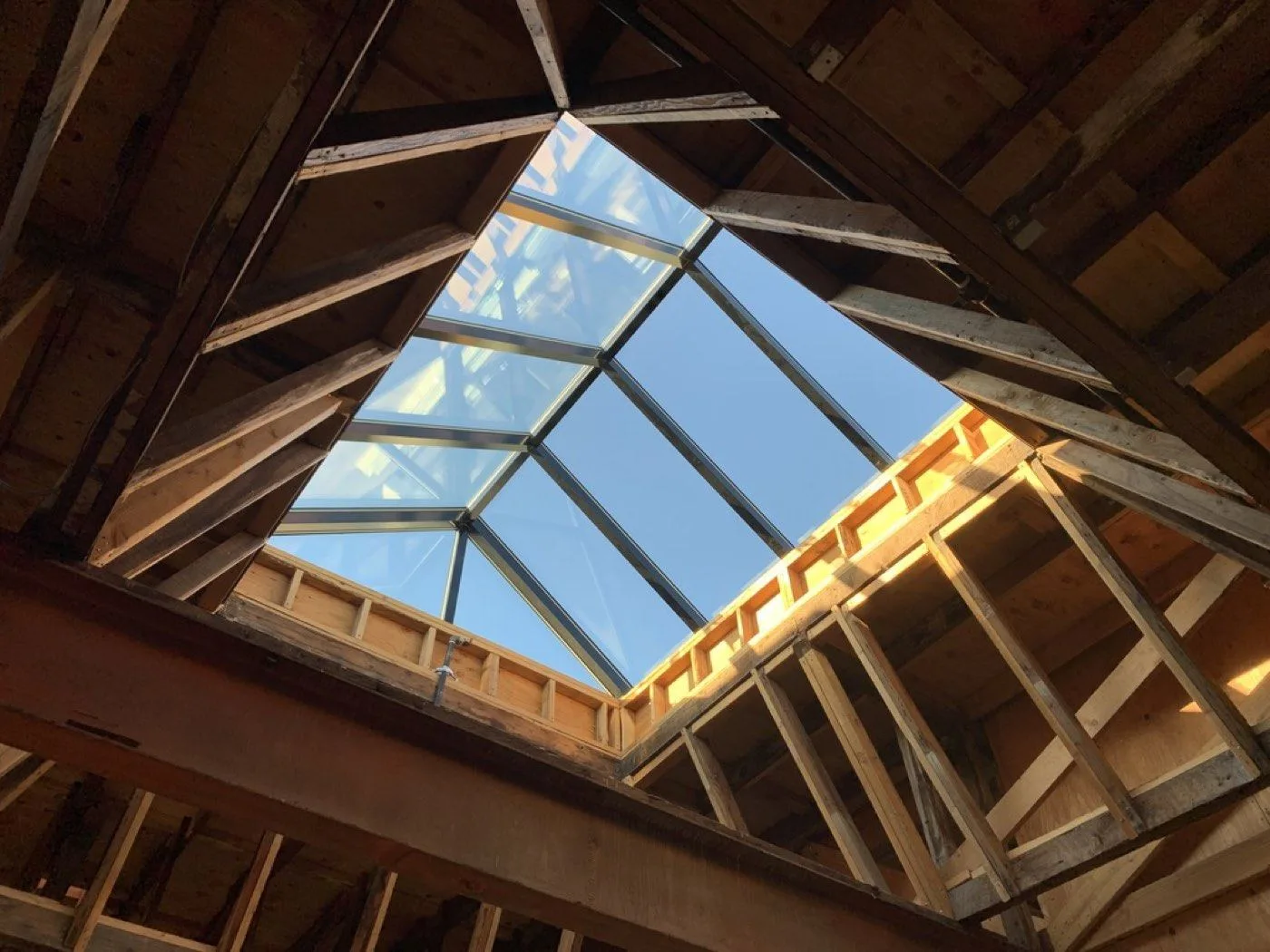
The triangular ends are glass instead of solid panel, so light comes in from the ends as well as the slopes. This is the more modern look, and it reads as a cleaner, more contemporary line than a metal-ended version.
Double-Pitch with Metal Ends
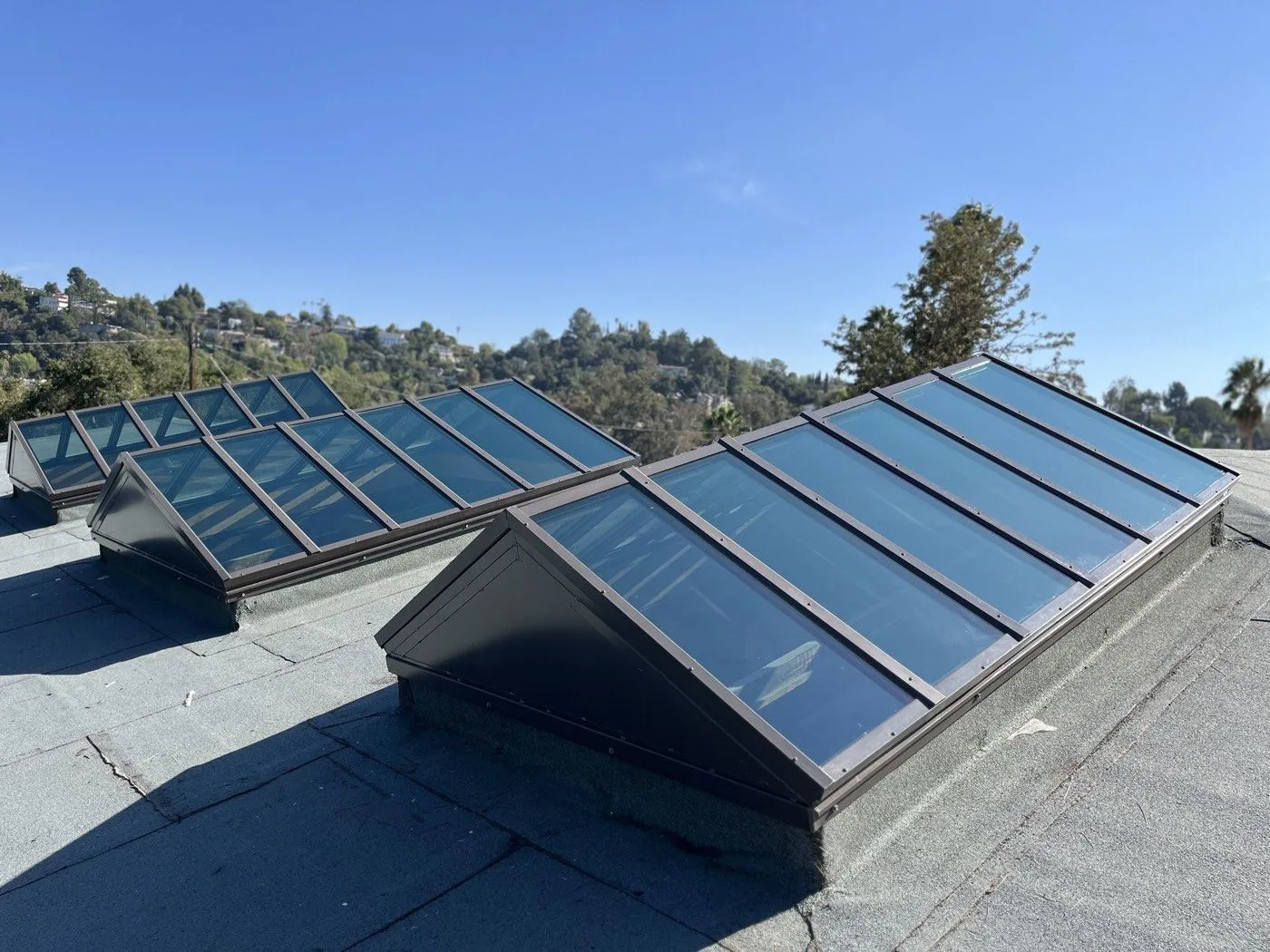
Same double-pitch structure, but the triangular ends are solid metal panel instead of glass. This reads as a more vintage, retro look, and it is a common choice on older homes where that solid-end profile matches the original architecture.
Lean-To
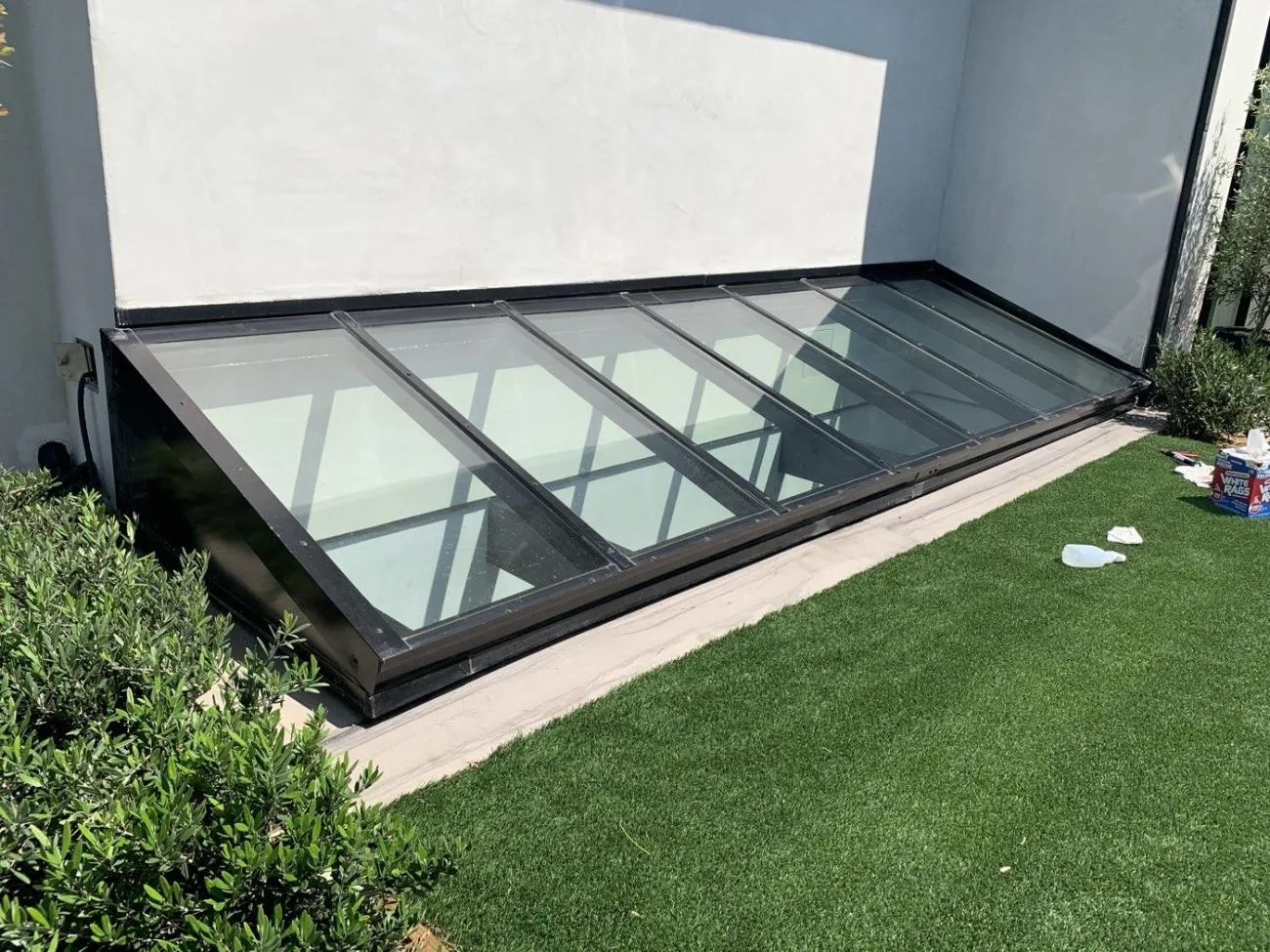
Glass that meets a wall at the high side, common where a roof steps up against a taller section of the house. A lean-to can abut one wall or, depending on the layout, two or three, wherever the roofline runs into a vertical surface.
Flat Custom Glass
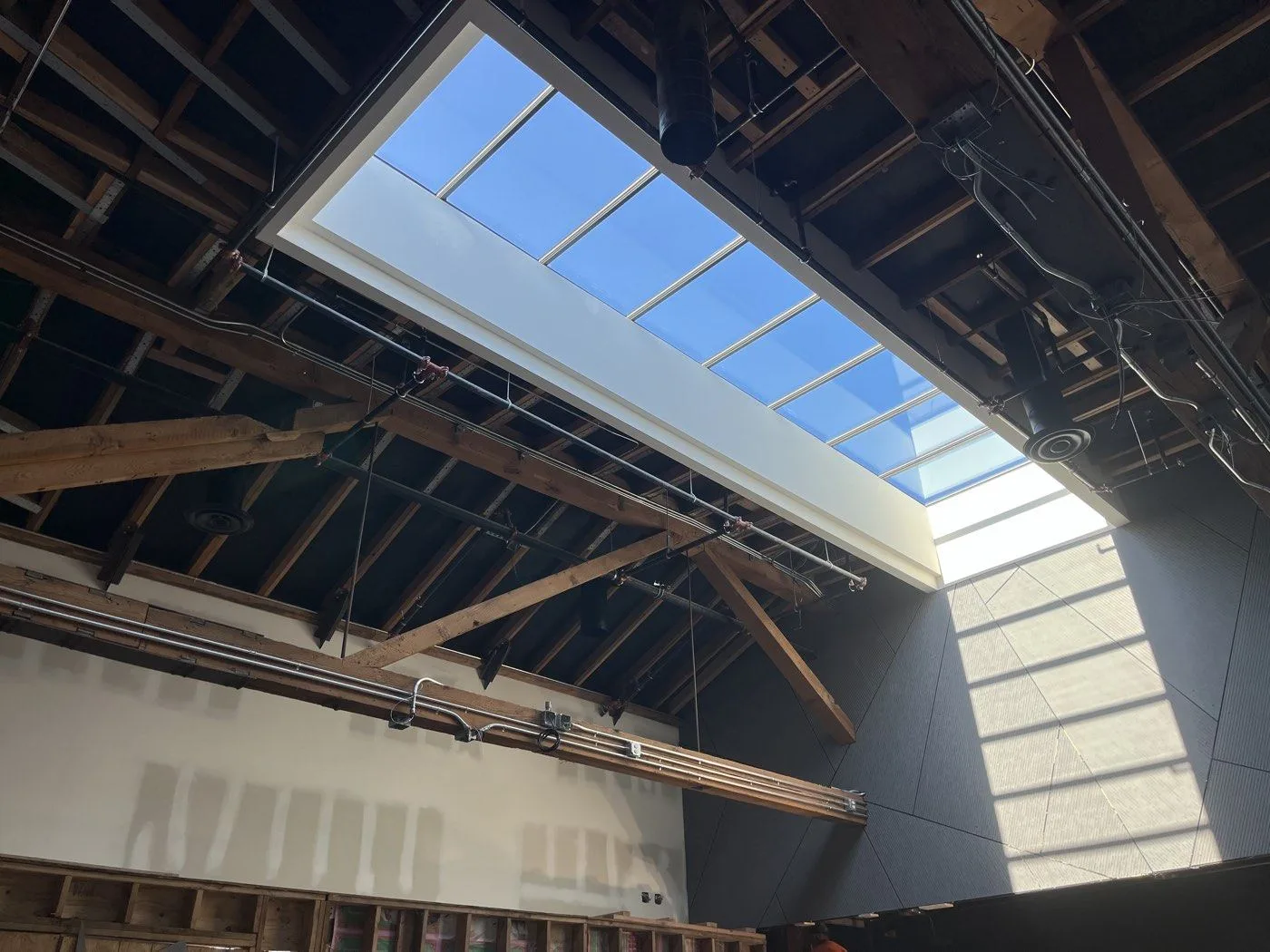
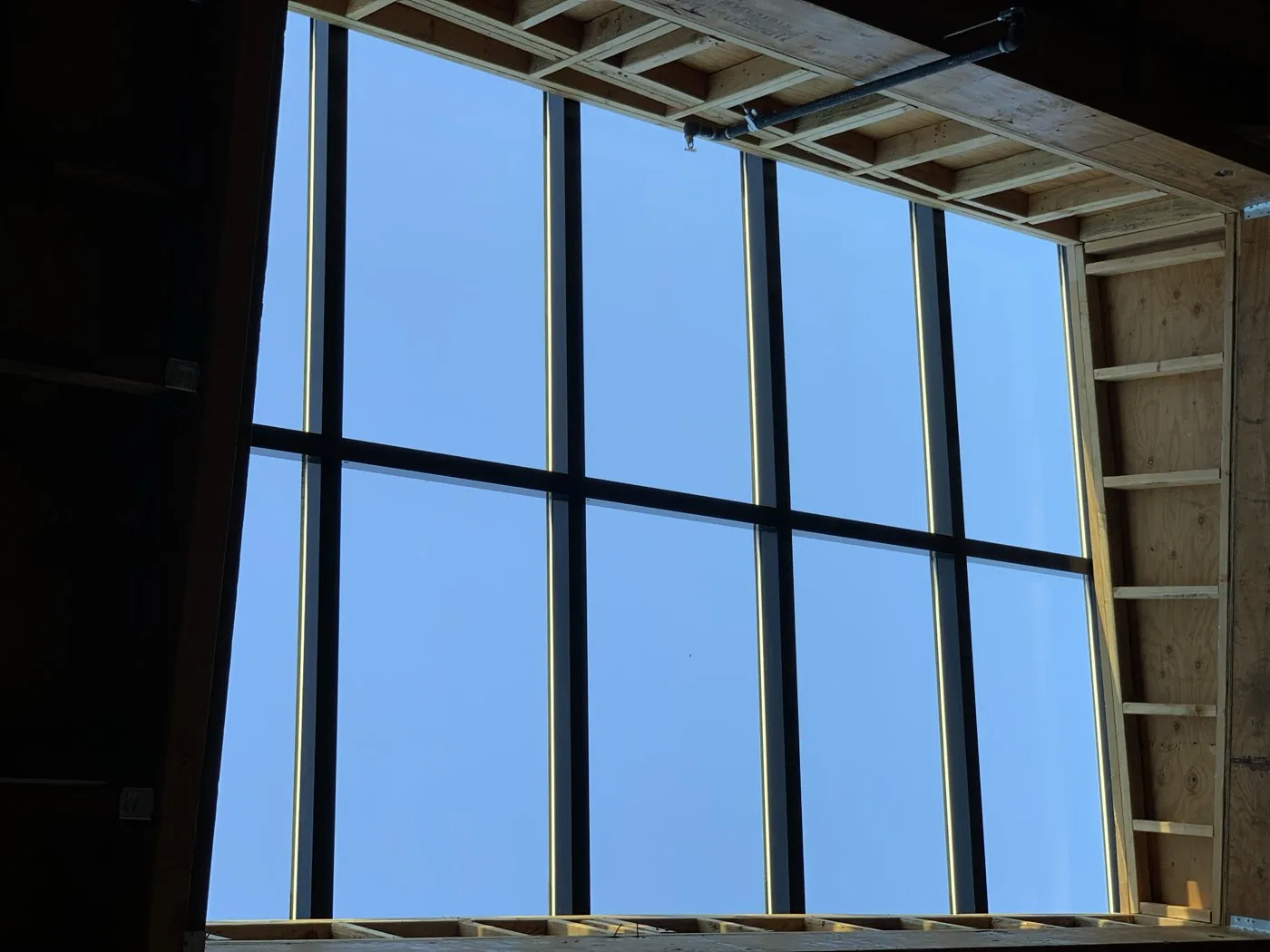
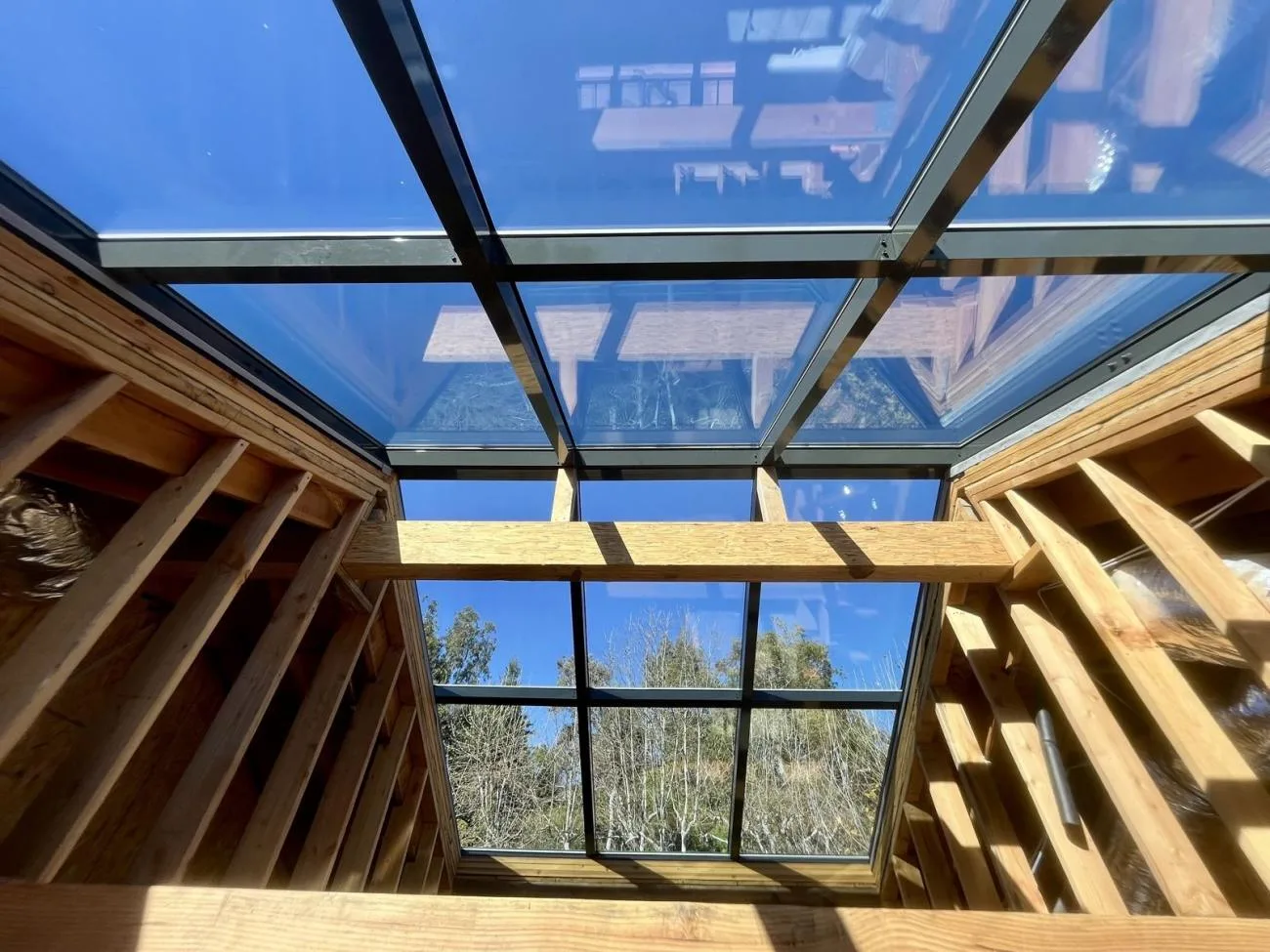
Flat glass is one of the most common custom shapes we build. On larger openings, structural bars break the glass into panels and carry the load, sometimes bars running one direction, sometimes bars and crossbars forming a full grid. The pattern is functional as well as visual, it is what lets a single large opening span safely in flat glass.
Ridge with Horizontal Section
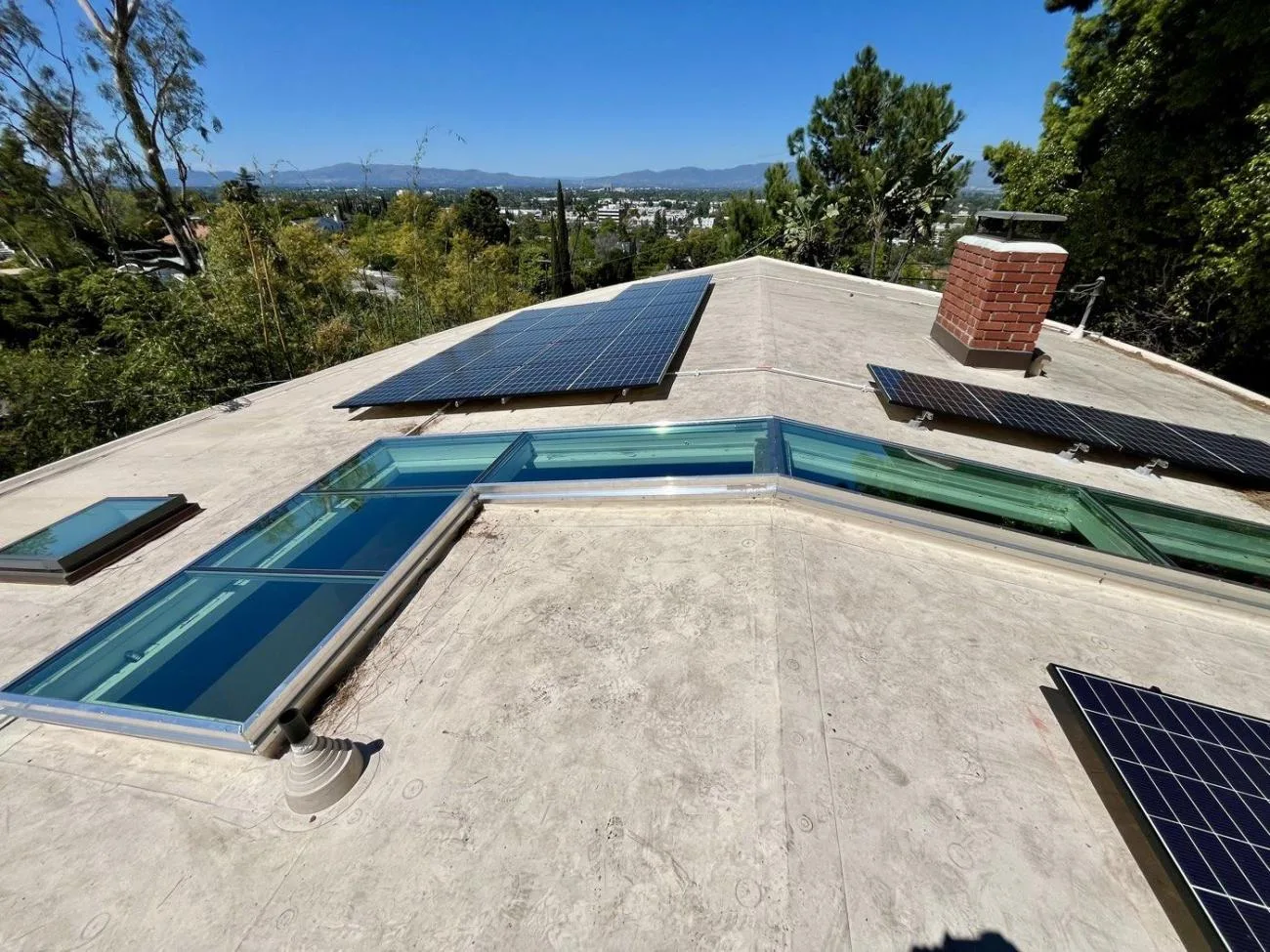
Not every roof is a simple rectangle, and not every skylight has to be either. This one is a narrow ridge that splits off into a horizontal flat section, built to follow the specific geometry of the roof it sits on. If your roofline is irregular, a custom shape can usually still be built to fit it.
Circular
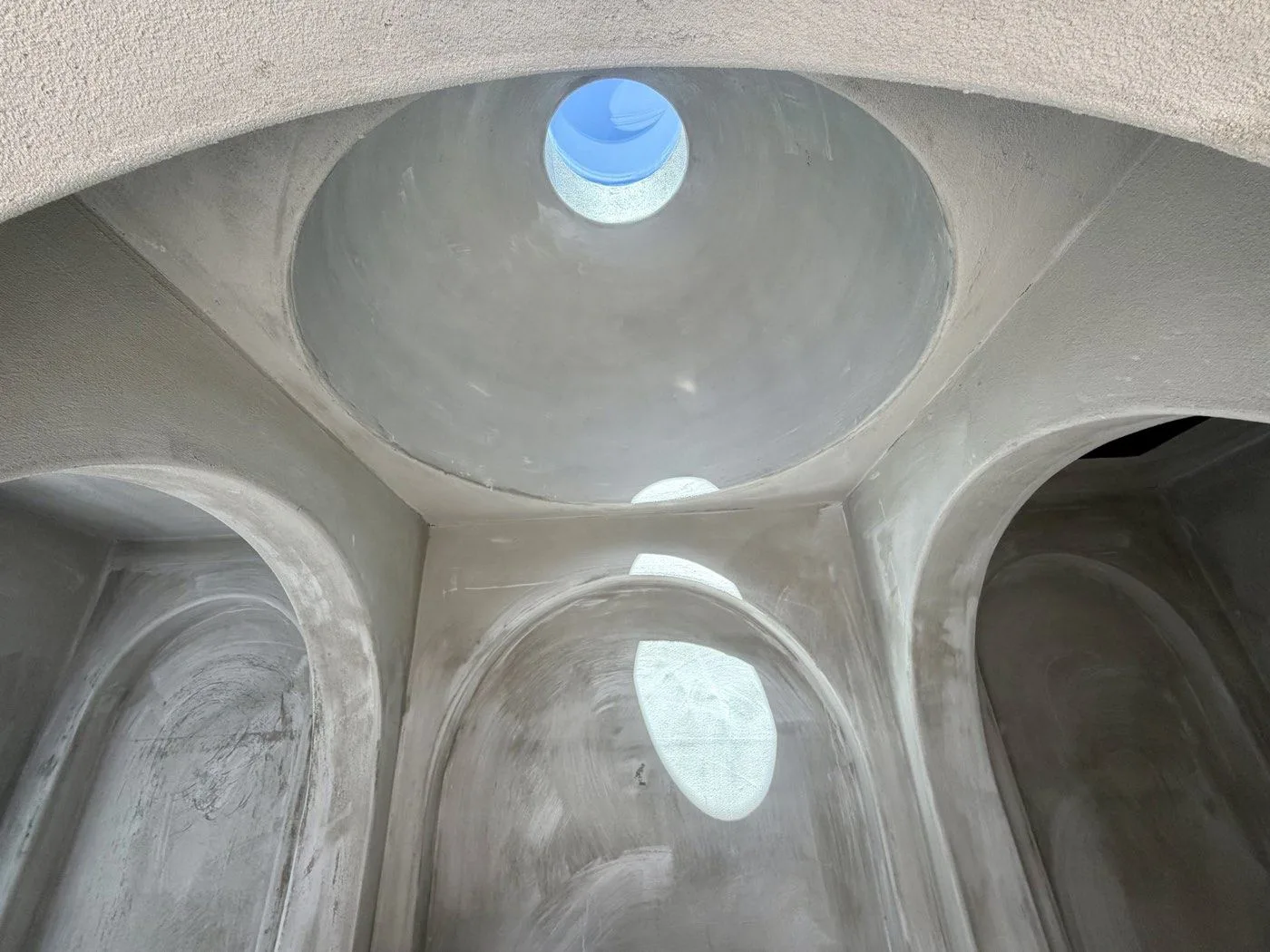
A round opening for a specific architectural moment, often over a stairwell, entry, or a feature ceiling where a circle of light makes more sense than a rectangle.
Octagon
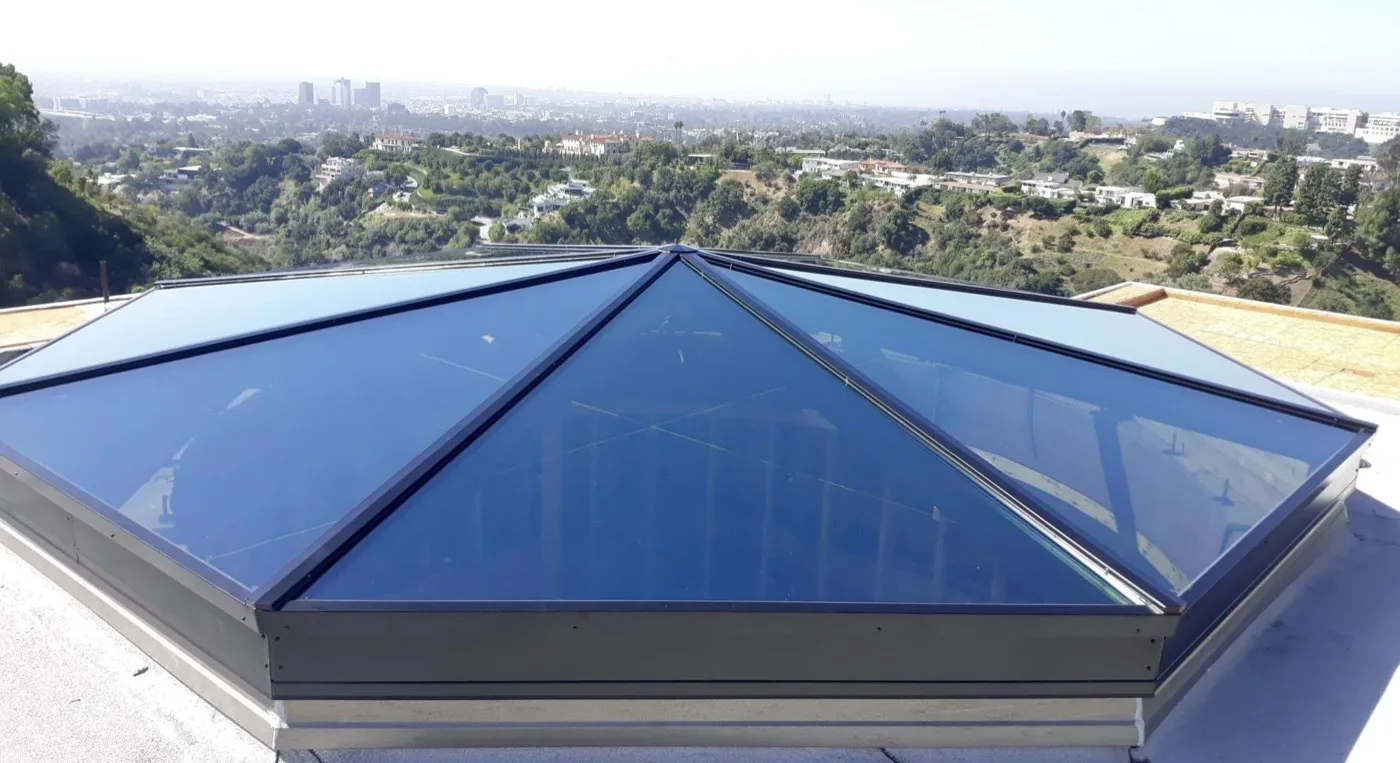
An eight-sided unit, a distinctive geometric alternative to a pyramid or a circle. Less common than the other shapes, but a strong option when the architecture calls for it.
Glass is the point
Custom work is where glass beats plastic clearly. Glass stays clear for decades, is more energy efficient, and blocks more outdoor noise, and it carries the architectural weight a feature skylight needs. All the glass we install overhead is tempered over laminated. California requires laminated glass on the interior side so that if a pane breaks it holds together rather than falling into the room. The tempered layer on the outside handles impact. We add low-E coatings to manage heat and UV as needed. Frames in bronze, black, white, or gray to match the building.
A typical job: A hillside home in Glendale had a flat roof over a stairwell that stayed dark all day. They wanted a pyramid to brighten it up. Pyramids need a flat roof to sit on, so that worked in our favor. We worked with the roofer and framer already on the job to build the right size opening while the custom pyramid was being fabricated, black frame, 1 inch insulated glass, a middle of the road low-E coating and clear glass to meet Title 24 without overspending on material. Once the unit arrived, the frame was assembled in place and glazed in a single day. The stairwell went from a dark core to the brightest spot in the house.
Custom replacement and reseal
Many custom skylights we work on are not new builds, they are existing custom units that need new glass. A failed seal, a cracked pane, or an upgrade to low-E. We can often replace the glass in the existing frame instead of rebuilding the whole unit. More on custom glass replacement.
What it typically costs
There is no real “starting price.” Even a small 2×2 pyramid set over an existing curb usually runs $2,500 to $3,000, and it goes up from there. Size drives most of the cost, adding a foot in each direction adds a lot of glazing area and often means thicker, more expensive glass to span it with fewer mullions. Shape matters too: a square or rectangle is the cheapest, then a right-angle triangle, then more complex triangle and trapezoid shapes. It’s not that the glazing process gets harder, it’s the same process either way, but the glass patterns get more complex and the material costs more, which is what drives the price up. Glass coatings and tints, including the high-performance low-E coatings some projects need to meet Title 24 energy requirements, also move the price. Material costs shift often enough that a true ballpark is hard to give without seeing the project.
How custom works
It starts with a visit and a conversation. We look at the opening and the roof, talk through shapes and glass, and work up an estimate. Custom units are fabricated to order, so they take longer to arrive than a standard size. When yours is ready, we schedule the install. The result is a skylight that looks like it was always meant to be there.